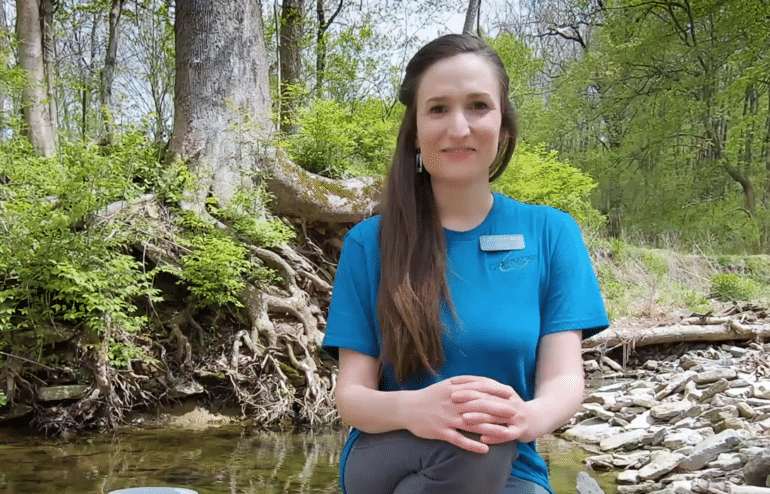
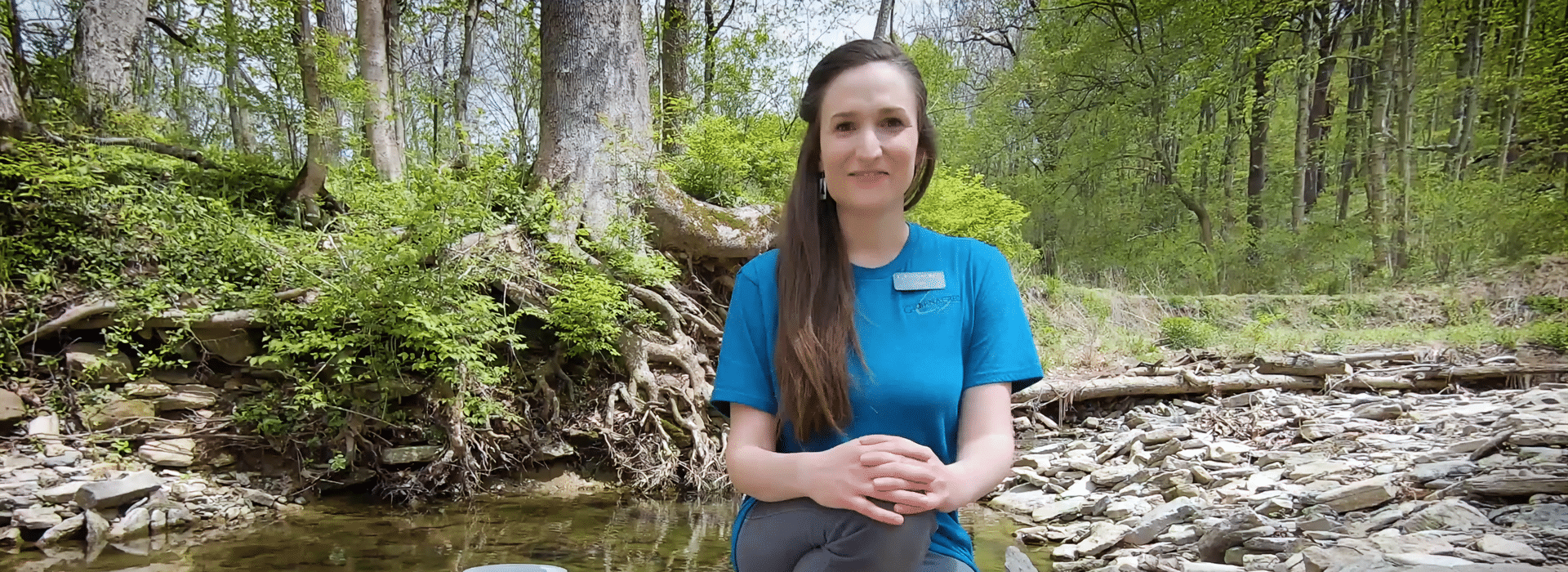
Emily Pickett – Saturday Stream Snapshot Organizer
Emily has been an Environment Educator at Greenacres since 2019. She took over Saturday Stream Snapshot in 2020 after participating in the program many times herself. She has been working on building awareness of the efforts to protect the watershed ever since.
Why is it important for people to get involved with programs like Saturday Stream Snapshot?
Protecting the water quality of our rivers and streams is incredibly important for both human health and the health of the plants and animals that make the watershed their home. Clean water is one of the most important resources on the planet! There are just too many bodies of water for one person or organization to protect, so we are absolutely dependent on our volunteers to make sure we are doing our part.
What is your favorite part of the program?
I love working with our volunteers who are passionate about caring for the environment. Even though we all have different backgrounds we are all coming together over this shared goal. The time spent running chemical tests is a great opportunity to get know and learn from each other.
What are you looking forward to with the program this year?
Watching the program grow with the support of our volunteers! The pandemic really slowed down our efforts in 2020 as we worked on a plan to resume the program safely. We’re fortunate enough to have plenty of room to spread out and I’m looking forward to getting samples collected and tested again.
Emily will be leading a Virtual Kickoff and Training session on February 20 for those interested in volunteering this year. You can sign up to attend here.