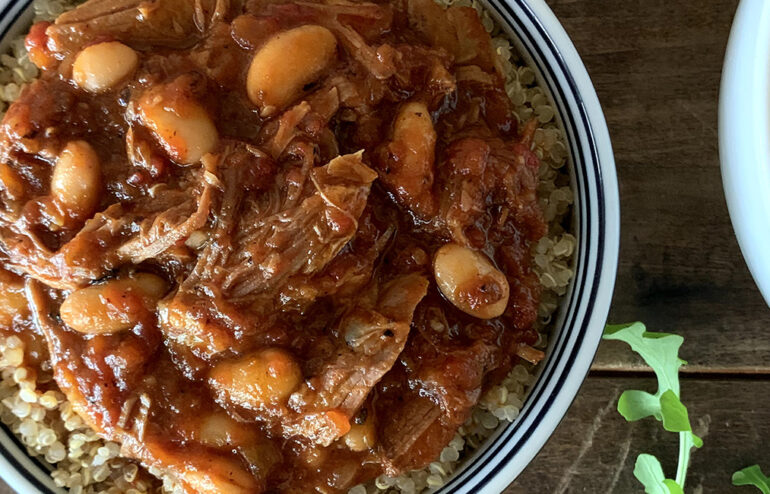
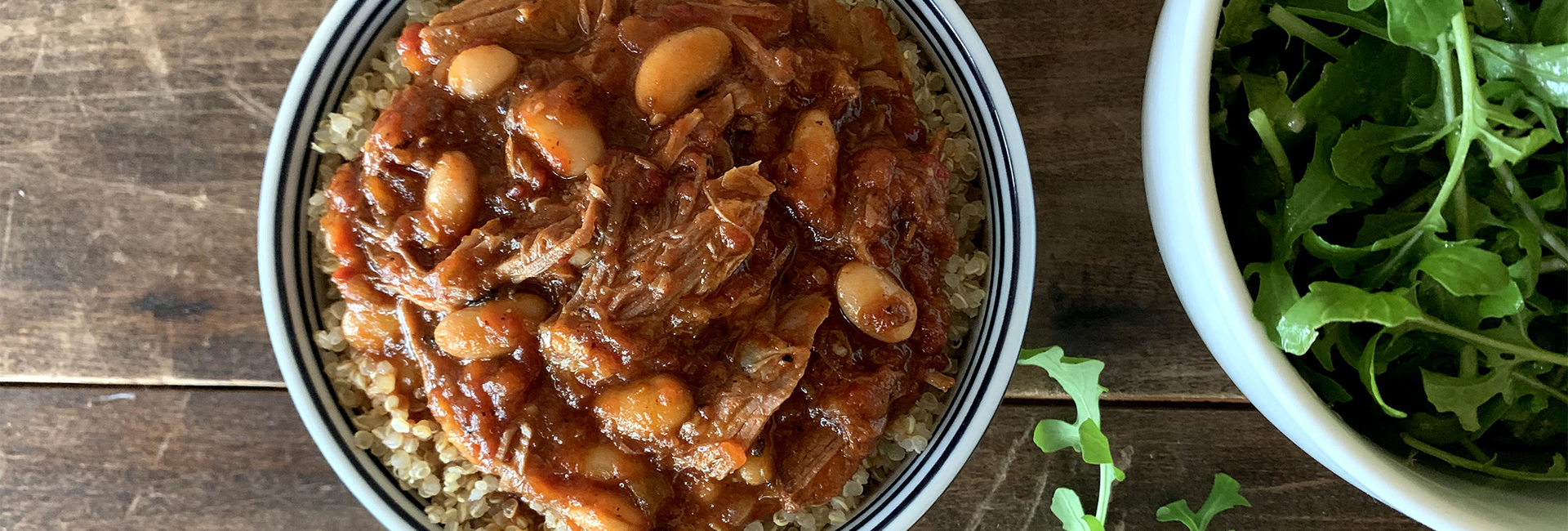
Moroccan-Spiced Braise with Lamb, Beef or Chicken
This dish is highly adaptable to your preferences, working well with lamb, beef, or chicken. Try customizing the thick and richly spiced tomato sauce to be chunky, or smoother, depending on your taste. We like this braise served over quinoa or couscous, but gnocchi, farro or even tagliatelle would be delicious!
Ingredients
- 4 lb Lamb shoulder, neck, and/or shank (or 2lb prepared stew meat)
- Or if you prefer beef, alternately use 3-4lb beef shank, or 2lb prepared stew meat
- Or you could use one large, whole chicken, or 6 chicken thighs
- 1 large onion, diced
- 1 Tbsp tomato paste
- 2 Tbsp whole cumin seed
- 1 tsp ground ginger, or 2 tsp freshly grated ginger
- 1 tsp salt, or to taste
- 1 tsp black pepper
- 1/2 tsp cinnamon
- 1 tsp smoked paprika
- 1 tsp chili powder
- 1/2 tsp freshly grated nutmeg
- 1/4 tsp ground cloves
- 4- 28 oz. cans diced tomatoes (or 3qt home-canned tomatoes)
- 3- 15 oz. cans white beans (great northern or cannellini)
Instructions
- On your stovetop, heat a large, oven-safe, heavy pot with a lid over medium-high heat. Sear meat on all sides, in batches until nicely browned. Avoid overcrowding the pot to ensure good browning. Set meat aside on a cutting board or in a bowl.
- Lower heat to medium. Add onions to any fat left in the bottom of your pot and cook, stirring occasionally, until golden and well caramelized. Add olive oil, tallow, or lard as necessary to prevent burning.
- Add tomato paste and spices to the onions and cook for one minute, stirring often, until the spices are very fragrant and smell toasty.
- Add the tomatoes to the pot a little at a time, using a wooden spoon to scrape up all the caramelized bits off the bottom. If you prefer a smoother tomato sauce, use a blender, an immersion blender, or a food mill at this time, returning sauce to the pot once your preferred consistency is reached.
- Add the meat and any accumulated juices back to the pot, incorporating with the tomatoes.
- Cover the pot and bake at 300º until meat is extremely tender, 4-8 hours. The time will vary depending on if your meat is boneless/thinner cuts (less time needed) or bone-in/thicker cuts (more time needed).
- If your meats have bones, remove bones at this time and shred the meat before adding the beans.
- Add beans to the finished braise. If your sauce is a little thick, do not drain the beans before adding. If your sauce is on the thinner side, drain the beans before adding. Stir well to combine.
- Serve the finished braise over a bed of your favorite starch or grain: couscous, quinoa, farro, pasta (like tagliatelle) or even gnocchi are excellent pairings.