Invasive Spotted Lanternfly and Tree of Heaven
Invasive Spotted Lanternfly and Tree of Heaven:
A Double Threat to Local Ecosystems
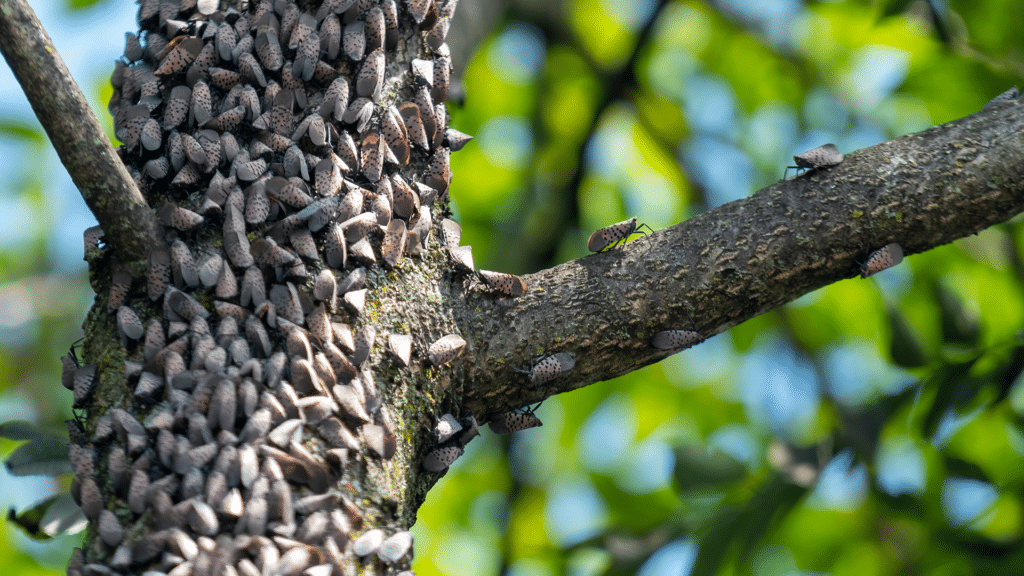
Spotted lantern fly is once again making the news since this is the time of the year when their eggs are most visible. This invasive insect species has been spreading across the United States since its first sighting in Pennsylvania in 2014. It was first detected in Ohio in 2020 and in Hamilton County in 2022, and it is now considered established in the region. As of February 17, 2026, the Ohio Department of Agriculture issued a statewide quarantine for spotted lanternfly, requiring inspection of certain plant materials before they are transported out of the state.
The spotted lanternfly is a type of planthopper, which means that it feeds on plant sap using its piercing mouthparts. They can cause significant damage to trees by feeding on their sap, which can weaken the tree, making it more susceptible to disease and other pests, and even killing it in severe cases. Nymphs feed on a wide variety of plants, including fruit crops such as apples, peaches, and grapes. As they feed, they excrete a sticky substance known as honeydew, which can lead to the growth of sooty mold on leaves, tree bark, and outdoor surfaces such as decks and patios. One tree to keep an especially close eye on is tree of heaven, the preferred host plant for adult spotted lanternflies.
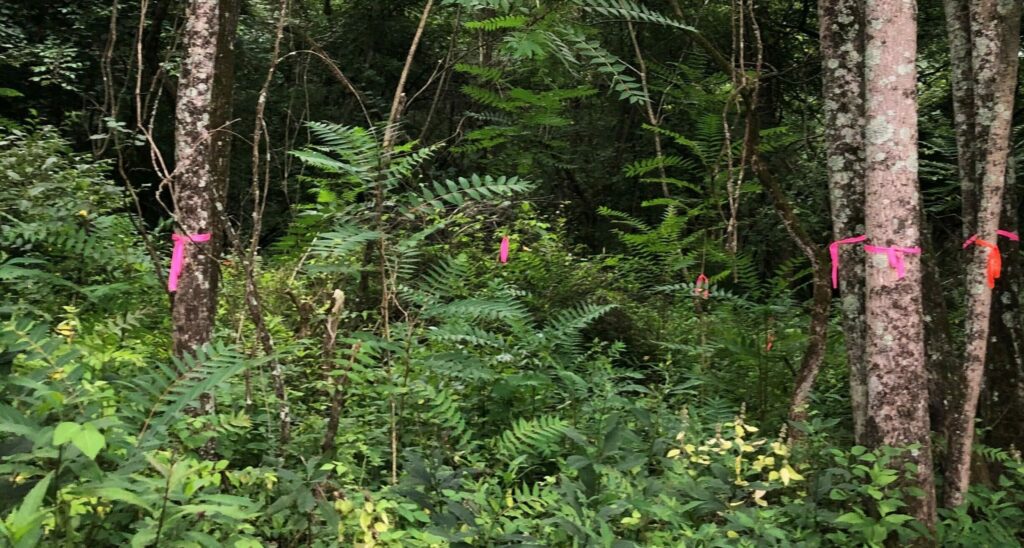
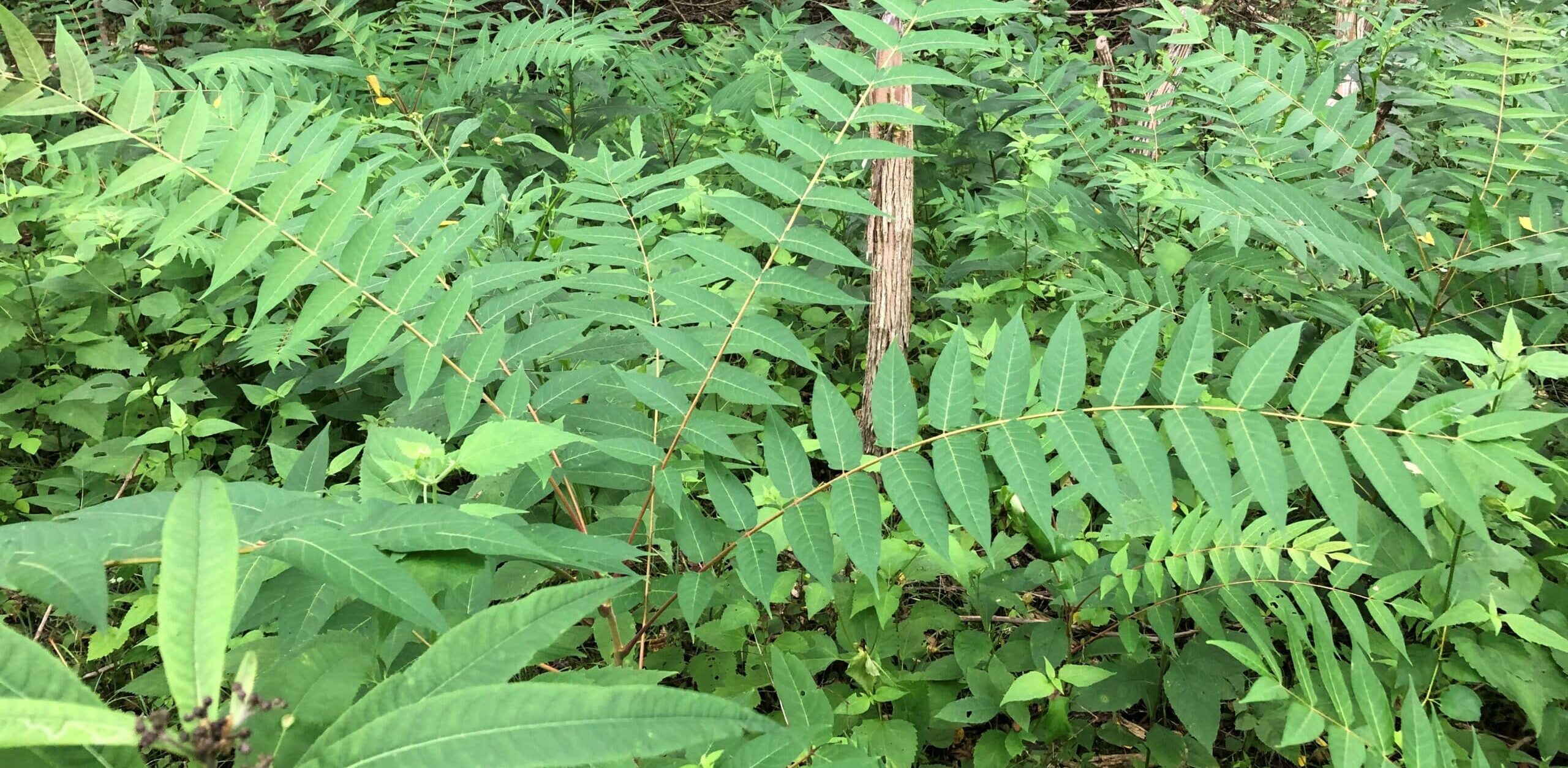
Tree of heaven (Ailanthus altissima) is also an invasive species that has become problematic in many parts of the country, including Ohio. It is highly successful due to its ability to produce clones in addition to over 300,000 seeds per year. These trees are also allelopathic meaning they can secrete chemicals into the soil that inhibit the growth of surrounding native vegetation. Greenacres is currently in the process of developing in-house methods to control tree of heaven.
What can be done to address this double threat to local ecosystems?
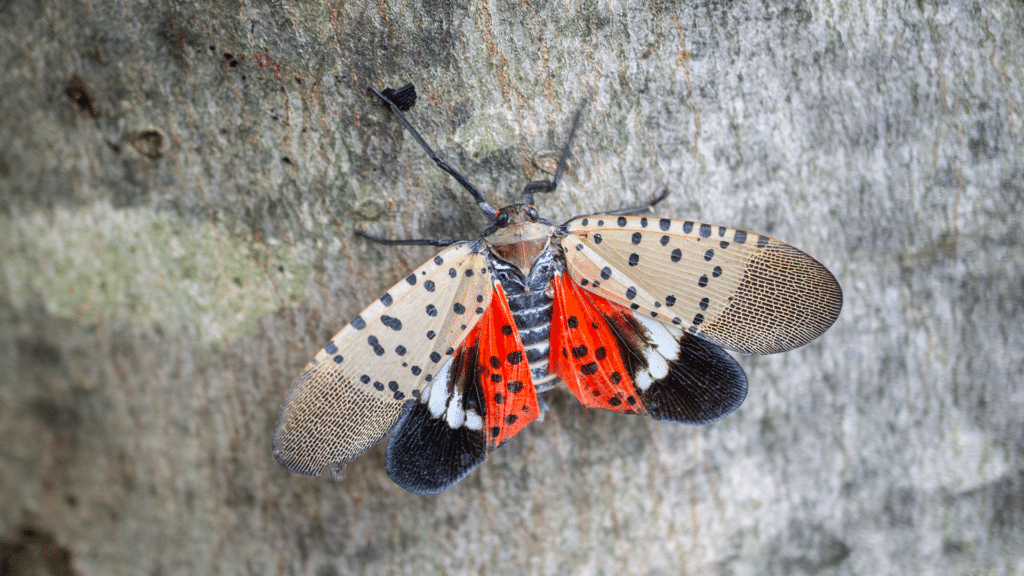
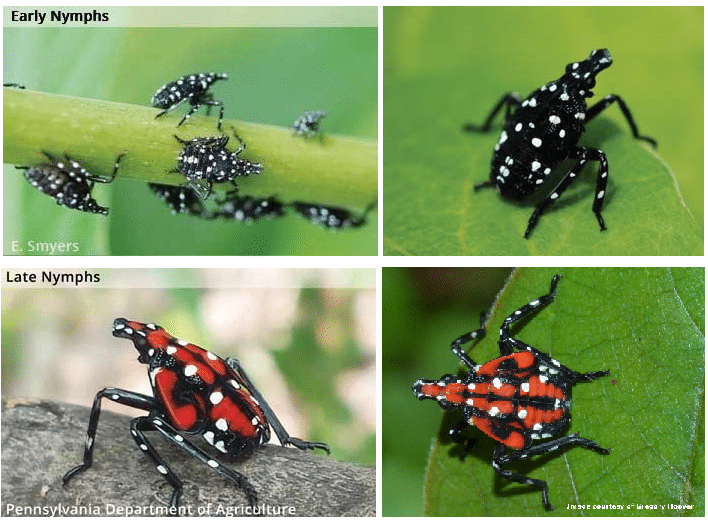
- Learn to identify spotted lanternfly eggs, nymphs, and adults. Egg masses can be found from fall through spring. In May, nymphs emerge and are black with white spots before developing red patches as they mature. Adults appear in summer through fall and grow to about 1 inch long, with a black head, gray wings with black spots, and red hind wings.
- Scrape and destroy any egg masses you find, and squish any nymphs or adult lanternflies when possible.
- The Ohio Department of Agriculture is no longer asking residents to report sightings of spotted lanternfly, as the insect is now considered established in the region.
- Remove or treat any tree of heaven growing on your property. This can be done using methods such as herbicides, cutting and stump treatment, or girdling. However, care should be taken not to disturb or harm other plants in the area.
- Encourage the growth of native plant species in your garden or landscaping. Native plants are adapted to the local environment and provide food and habitat for a variety of insects, birds, and other wildlife.
- Identification apps such as iNaturalist can also help confirm species if you are unsure whether an insect is a spotted lanternfly.
By working together, we can help protect our local ecosystems from the negative impacts of invasive species like the spotted lanternfly and tree of heaven. With populations now established in Ohio, we expect to see more spotted lanternflies in the Greenacres and Indian Hill area in the coming years. If you have any questions or concerns, don’t hesitate to reach out to Greenacres or other local organizations for advice and support.