100% Grassfed Grass finished
Beef
100% Grassfed, Grass Finished Beef
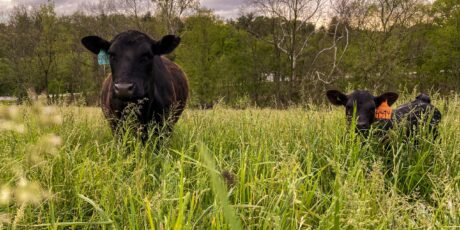
Greenacres produces 100% grassfed, grass finished beef in the Cincinnati area. Our cattle spend their entire lives roaming outdoors, eating fresh, living pasture during the growing season and high quality hay in the winter, a diet that suits their natural digestive processes making for healthy, happy cows. Our beef is always 100% grassfed and grass finished.
Beef available year round
Check our product availability to see what we currently have in stock.
The Greenacres Difference
- 100% grassfed and grass finished, never fed grain
- Free to roam on pasture from birth to harvest day
- No unnecessary antibiotics
- Low stress calf weaning
- Staff who love our animals
- Butchers chosen with animal welfare in mind
- Cattle rotated quickly through pasture
- Without confinement, manure fertilizes grasses and improves the soil
- Healthy soil sequesters carbon, holds rainwater
- Higher Omega 3 and lower Omega 6 fatty acids (anti-inflammatory)
- Fuller phytonutrient profile, including vitamins A and E (Learn More)
- Lower overall fat content
The Greenacres Difference
- 100% grassfed and grass finished, never fed grain
- Free to roam on pasture from birth to harvest day
- No unnecessary antibiotics
- Low stress calf weaning
- Staff who love our animals
- Butchers chosen with animal welfare in mind
- Cattle rotated quickly through pasture
- Without confinement, manure fertilizes grasses and improves the soil
- Healthy soil sequesters carbon, holds rainwater
- Higher Omega 3 and lower Omega 6 fatty acids (anti-inflammatory)
- Fuller phytonutrient profile, including vitamins A and E (Learn More)
- Lower overall fat content
A Responsible Protein Choice
How does 100% grassfed beef compare to plant-based “meat alternatives”? Ingredients used to produce these products (soy, peas, seed oils, rice, etc) are grown in huge, industrial agricultural operations that tend to specialize in and grow only one crop, a practice known as ‘monocropping’. Monocrop agriculture can harm the environment in many ways; compacting and degrading soils, using large quantities of pesticides and herbicides, polluting water, and harming biodiversity. Monocropped soils can be devoid of the lifeforms you’d find in healthy soils, like bacteria, invertebrates, insects, and fungi.
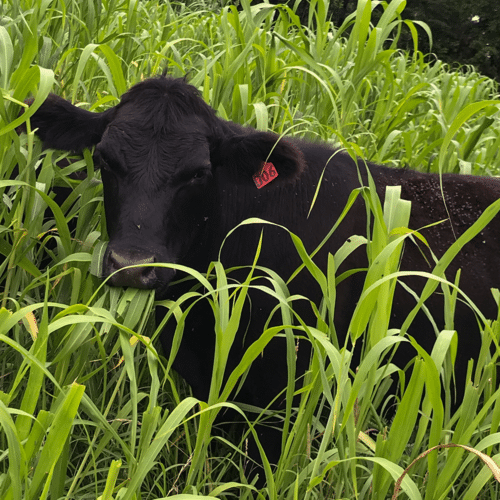
Raising cattle on pasture improves both the quality and quantity of soil biology, sequestering carbon and building biodiversity.
Our Genetics
For over 30 years, Greenacres has been developing a line of Angus genetics with excellent performance in grass based systems. Our farmers are constantly improving our herd; introducing genetic traits that make our cows finish better on grass, while our researchers study the farming practices that make products with better nutritional properties. This collaborative effort between farmers and scientists creates beef with excellent flavor, texture, and nutritional properties.