The Spotted Lanternfly

The Spotted Lanternfly
(Updated February 2026)
The spotted lanternfly has become more firmly established in Ohio, with established populations in 18 counties and the species observed in several additional counties. Spotted lanternfly was first detected in Ohio in 2020 and in Hamilton County in 2022, and it is now considered established in the region. As of February 17, 2026, the Ohio Department of Agriculture (ODA) issued a statewide quarantine for spotted lanternfly, requiring inspection of certain trees, nursery stock, and related materials before they are transported out of the state.
The Ohio Department of Agriculture is no longer asking residents to report sightings of spotted lanternfly since the insect is now considered established. However, residents are encouraged to learn to identify the insect and destroy it when possible.
-
-
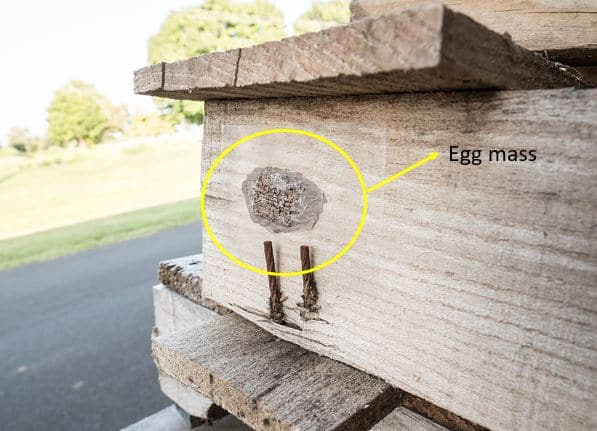
- Eggs- scrape them off the tree or other surface, double bag them and throw them away. Alcohol or hand sanitizer can also be used to kill them. Egg masses are typically found from fall through spring and may appear as gray, mud-like patches on trees, outdoor furniture, stones, or other surfaces.
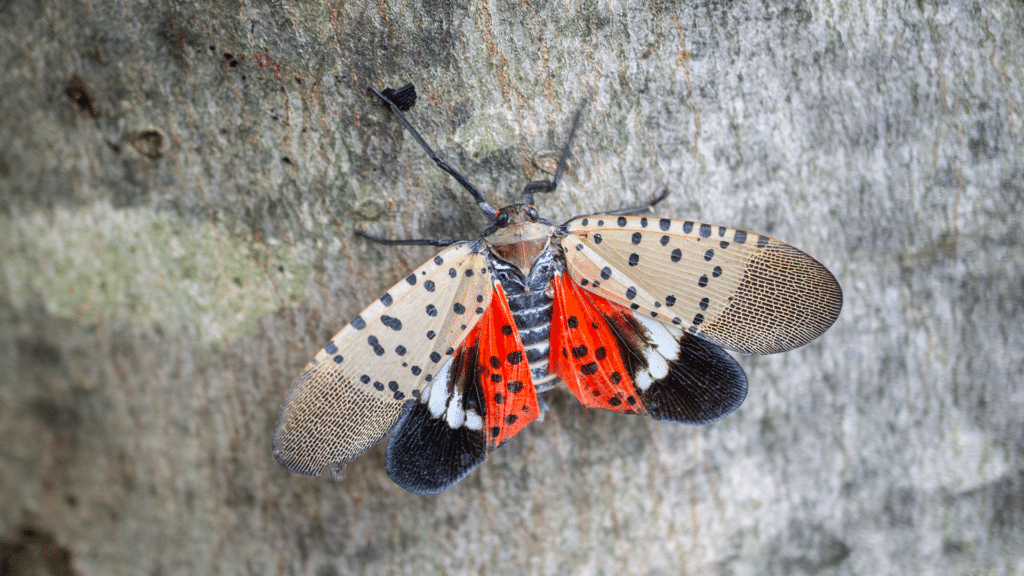
- Specimens- If you encounter nymphs or adults, they can be destroyed by squishing them. Nymphs emerge in May and are black with white spots, developing red patches as they mature. Adults appear in summer through fall and grow to about one inch long with a black head, gray wings with black spots, and bright red hind wings.
- Identification apps such as iNaturalist can help confirm whether an insect is a spotted lanternfly.
-
The following link provides additional information and control recommendations from the Ohio Department of Agriculture:
https://agri.ohio.gov/divisions/plant-health/invasive-pests/invasive-insects/slf
(This post was originally written in March 2021)
Traveling this summer? Beware of unwanted hitchhikers. The spotted lanternfly (Lycorma delicatula) was first reported in Pennsylvania in 2014 and has since spread to several eastern states and the Midwest. Lanternflies are poor fliers but can hitchhike. Large egg masses are formed and these masses are laid on trees, wood or rusty metal (e.g. old train cars). Egg masses can also be found on vehicles, outdoor equipment, stone, or other smooth surfaces, and it is these egg masses that are often moved by human assisted spread.
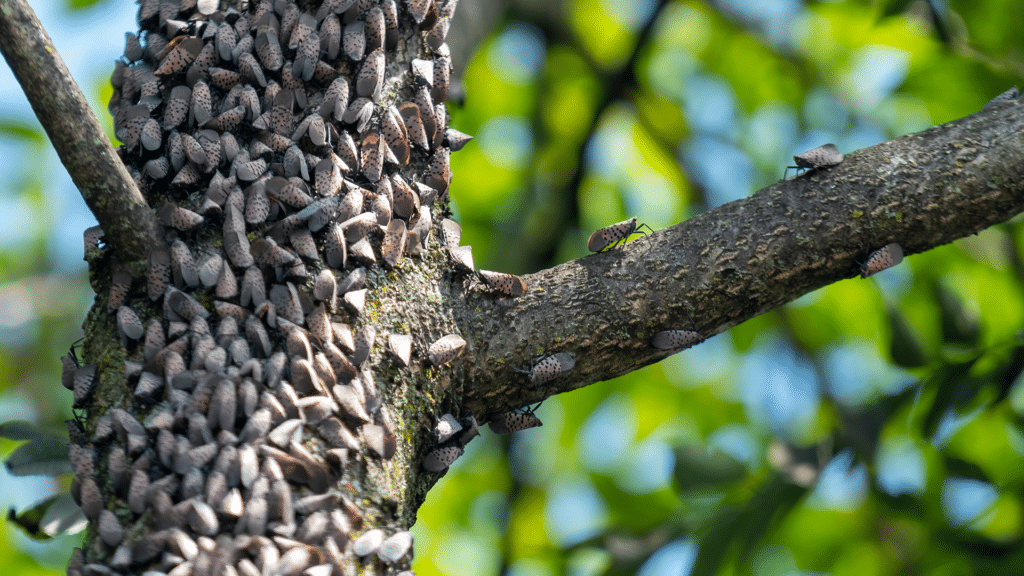
The spotted lanternfly can congregate in large numbers and preferred hosts are Tree of Heaven and grapes but spotted lanternflies have been documented on a variety of species. These phloem feeders concern fruit producers as their large numbers can cause a nuisance. They squirt honeydew from their abdomen (which can rain down on people) and this substance promotes the growth of black sooty mold on leaves, bark, and outdoor surfaces such as decks and patios.
If you are traveling east, do not pack up the lanterfly when you return home. Check yourself and your belongings for any tag-alongs. Adults are the easiest to spot and are most abundant late summer through fall. With populations now established in Ohio, residents may begin seeing more lanternflies in the coming years.